
Xinomavro: Greece's Great Red Wine
At a glance
Colour – Red – and also rosé, sparkling wine and even blanc de noir
Name – Greek Ξινόμαυρο, pronounced ksee-NO-mav-ro: from xino (sour) and mavro (black)
Home – Macedonia, northern Greece
Appellations – PDO Naoussa · PDO Amyndeo · PDO Goumenissa · PDO Rapsani
Vineyard area – around 2,000 hectares, almost all of it in Greece
Typical – tomato, dried olives, red berries, roses – pale colour, hard tannins, high acidity
Ageing – one of the longest-lived red varieties in the Mediterranean
Often compared to – Nebbiolo – pale colour, hard frame, long life
Every score on this page comes from our own tastings; we do not sell wine. Where we give a figure such as "from 57 of our own tastings", we count wines that are single-varietal or at least half Xinomavro – blends with a small Xinomavro share stay out.
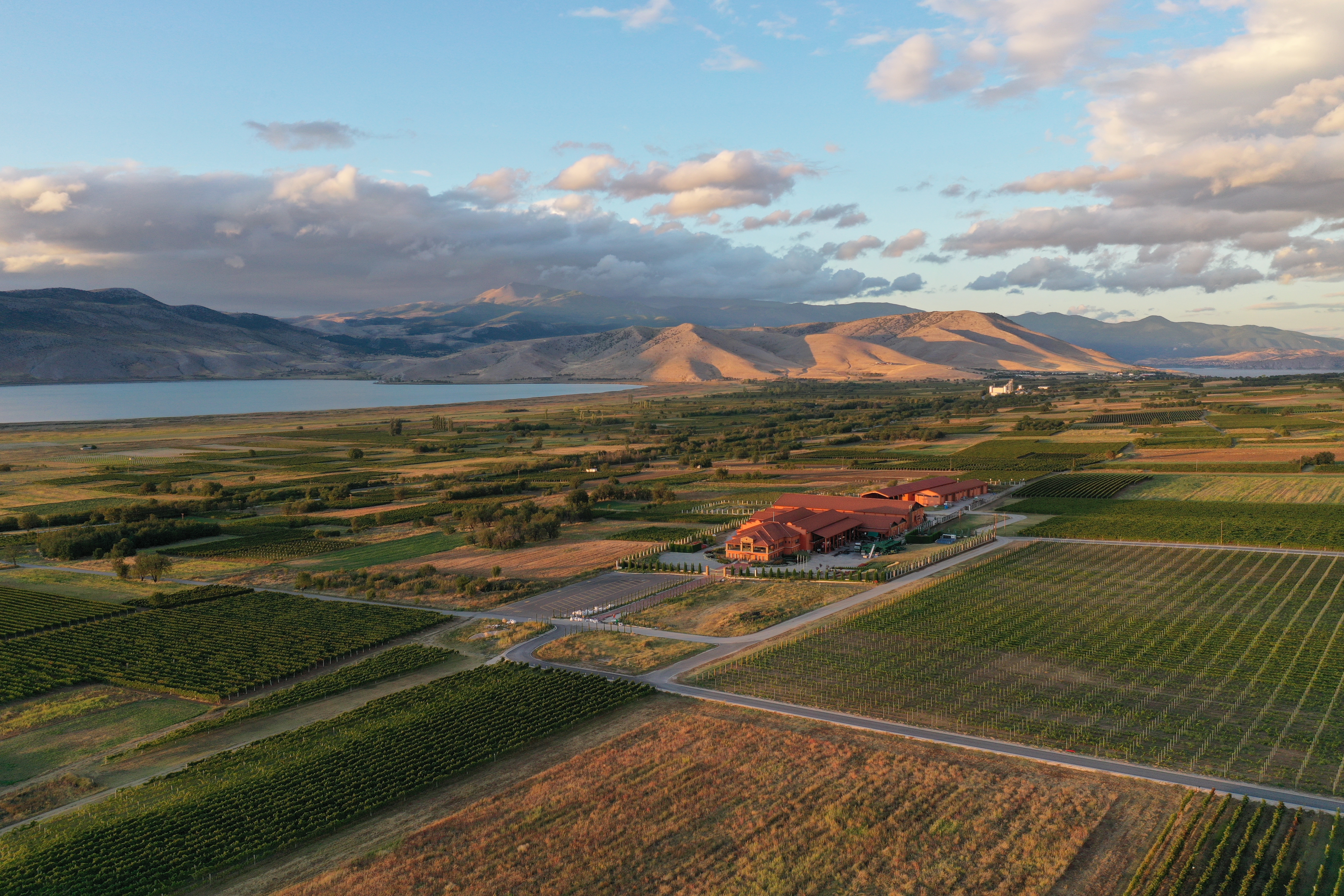
Xinomavro country: the Amyndeo plateau with the Alpha Estate winery among its vineyards. Photo: Alpha Estate
What is Xinomavro?
Xinomavro is the most important red grape variety in Greece, and the only one you can place next to the great varieties of Europe without embarrassment. Its name is also its programme: xino means sour, mavro black. The berry is dark, the wine is not – Xinomavro almost always turns out paler than the name leads you to expect, and it loses its colour early. What remains is a frame of acidity and tannin that can be demanding in youth and that turns, over the years, into something few other Greek reds ever reach.
The variety is difficult. It ripens late, needs cool nights and low yields, and it forgives very little: in a mediocre year Xinomavro quickly becomes a lean, bitter wine. In a good year, in the hands of a grower who knows what they are doing, it becomes one of the most exciting reds in the Mediterranean.
Its home is Macedonia, in the north of the country. Four protected origins are built on it: Naoussa and Amyndeo as single-varietal red appellations, Goumenissa and Rapsani as blending appellations. Beyond those it is planted across northern and central Greece – and beyond the Greek border as well.
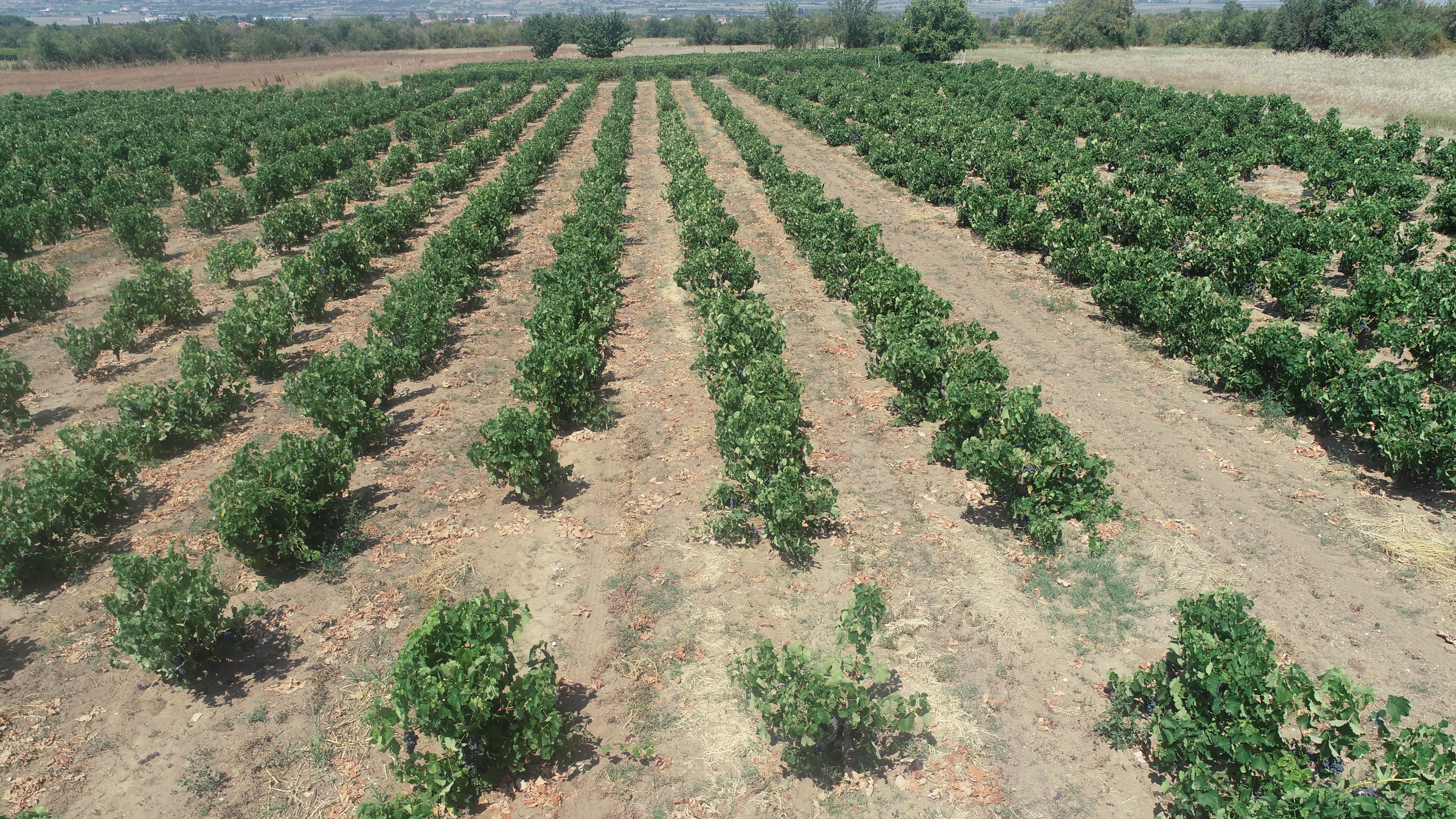
Old bush vines in the Barba Yannis vineyard near Amyndeo – trained without wires, each vine standing on its own. Photo: Alpha Estate
What does Xinomavro taste like?
There is one lead aroma by which you can pick the variety out blind, and it sounds odd at first: tomato. Sun-dried tomato, tomato paste, dried peppers – alongside olives, redcurrant and sour cherry, rose petals, herbs, and with the years tobacco and walnut. People meeting Xinomavro for the first time often take that for a fault. It is the opposite.
On the palate the acidity registers first, then the tannin – grippy, sometimes angular, and in young wines from difficult years simply hard. That is exactly why the variety works so well at the table: it wants fat and salt, grilled lamb, braised beef, aged hard cheese.
Serving temperature matters more here than with most reds. Served too warm, Xinomavro turns broad and loses the very thing you opened it for. With the SI-LA-VIE 2016 by Aidarini (88) that was plain to follow in the glass: cool, a clear Xinomavro; warmer, any old Merlot.
The four appellations
PDO Naoussa – the classic home
Naoussa lies on the south-eastern slopes of Mount Vermio at 150 to 400 metres and prescribes 100 per cent Xinomavro. Any other grape in the wine means demotion to PGI Imathia or Macedonia. That makes Naoussa the variety's hardest test: there is nothing for a weak vintage to hide behind.
It is also home to the best Greek red we have ever had in the glass. The Vrana Petra 2017 by Thymiopoulos fills the room from the moment it is poured, has polished tannins and a finish that refuses to stop: 99+ points, the highest score in our entire database. What is remarkable is the vintage. In Naoussa, 2017 was a slightly above-average year, not a great one – Xinomavro evidently does not need an exceptional vintage in this region to make an exceptional wine. The Earth and Sky 2021 from the same estate (91) shows its juicier, more approachable side.
The best-known Naoussa wine of all is Kir-Yianni's Ramnista, and with it we have had little luck across several vintages: 2019 (88) seemed surprisingly broad for one of the strongest Naoussa vintages of the century, 2018 (90) showed a light cork taint, and the 2006 (86) had already lost too much primary fruit despite fine tannins. The Cuvée Villages 2019 (90) from the same house and year convinced us more than its big brother.
At the other end of the range stands the Naoussa by Cavino (84), a wine you can find in German discount supermarkets: true to type, fault-free, without excitement – and still one of the better Greek wines on those shelves.
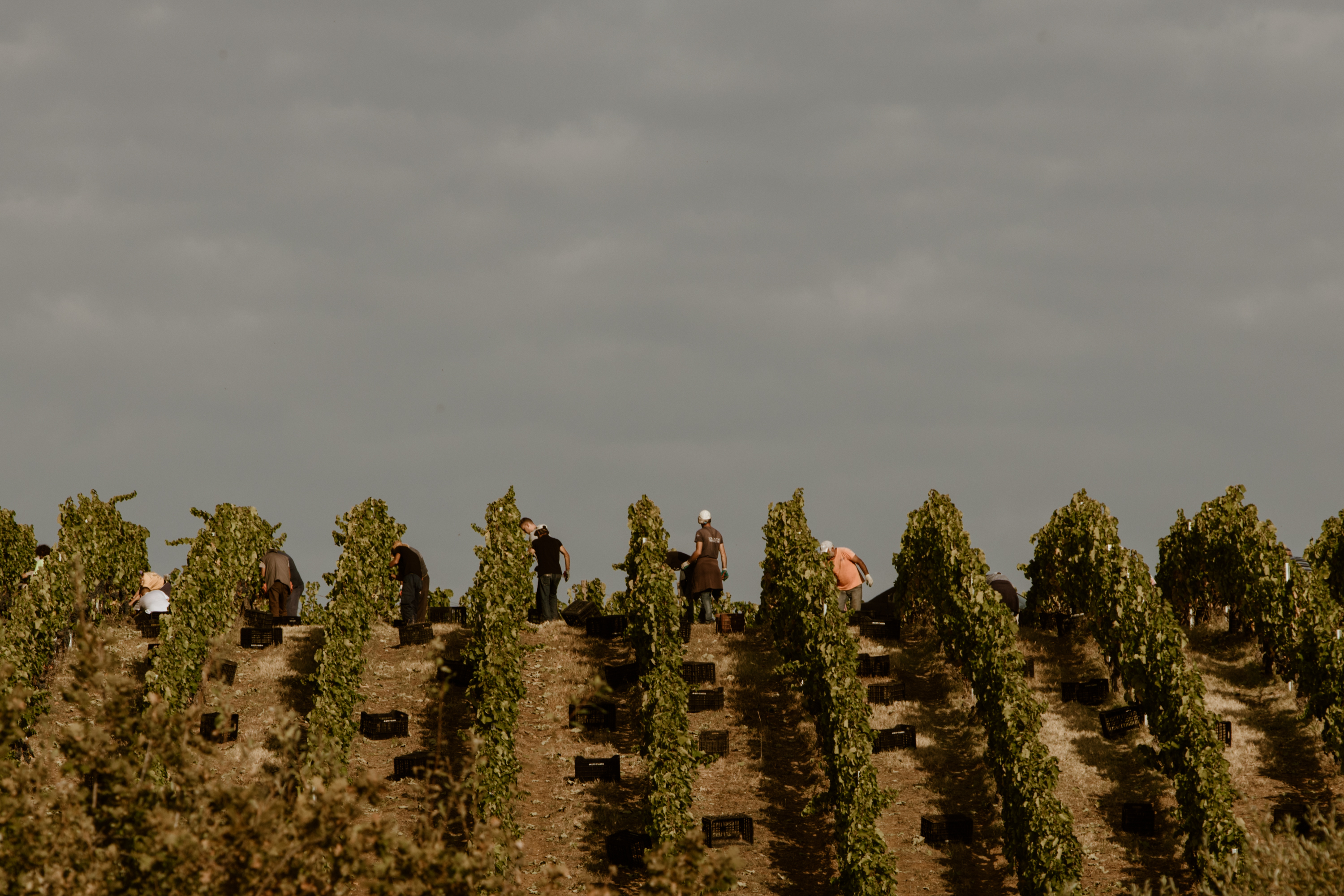
Harvest in block 5 of Kir-Yianni's Naoussa vineyard, the Xinomavro part of the Diaporos. Photo: Kir-Yianni
PDO Amyndeo – the high ground
Amyndeo is Greece's highest and northernmost Xinomavro appellation: 570 to 750 metres, sandy soils, a sharply continental climate, and four lakes that soften the temperatures. Amyndeo is also the only PDO in Greece where Xinomavro is permitted not just as a red, but as rosé and sparkling wine too – a freedom no other region has, and one that has changed the picture of the variety more than any debate about red wine styles.
Among the reds, the wines of Alpha Estate from the Hedgehog vineyard are among the most reliable in the appellation. The Hedgehog 2017 (93+) had hit its drinking window exactly: blackberry, smoke, herbs, everything in its place – and it comes from the vintage Amyndeo rates as the best of its decade. Its big brother, the Barba Yannis Reserve 2017 (90+), impresses with density and salinity but is the more awkward wine – a case where the smaller bottling gives the greater pleasure. Kir-Yianni's Kali Riza 2019 (89) needed a long time in the air, and the entry-level reserve from the Amyndaion Winery (81) fell short on the palate of what its nose had promised.
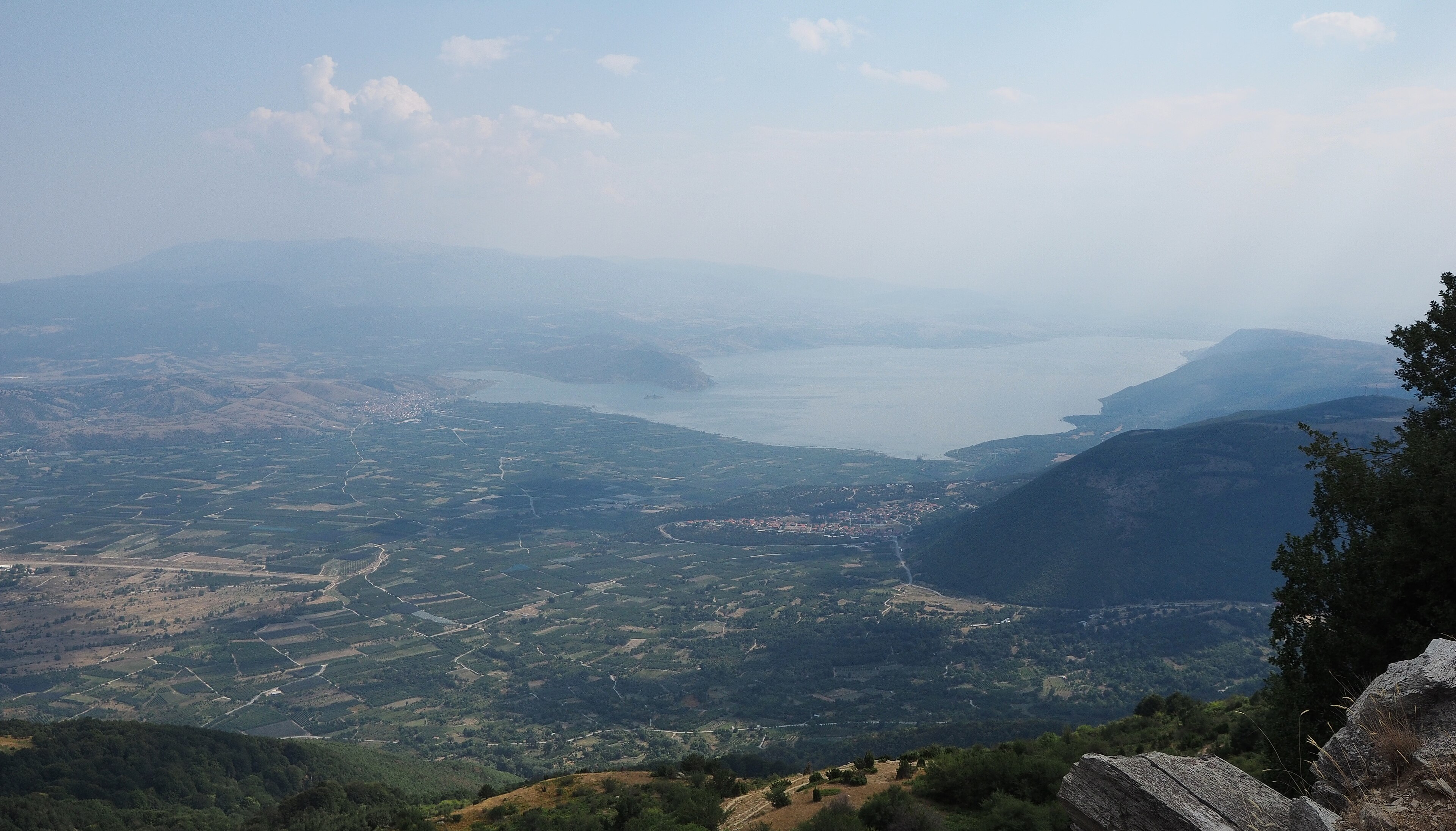
Lake Vegoritida – the largest of the four lakes that temper the climate of Amyndeo. Photo: Petar Milošević / Wikimedia Commons, CC BY-SA 4.0
PDO Goumenissa – Xinomavro with a partner
Goumenissa requires a blend: at least 20 per cent Negoska must be in the wine, with Xinomavro making up the rest. Negoska is held to be the softer partner, the one that tames the tannins – a claim you may well question when you taste Negoska on its own, but one that often works out in the finished wines.
The two best Goumenissa of our tastings come from the same vintage and even share the same blend ratio. Kir-Yianni's Bidabla 2019 (93) is one of the most elegant Goumenissa we have met, with an interplay of tomato and violet – we preferred it to the famous Ramnista of the same year. The Goumenissa 2019 by Mikro Ktima (92+) goes the other way: co-fermented, concentrated, with so little of the variety's signature that you might take it blind for an international wine.
From Aidarini we know the appellation across two vintages: the regular bottling 2018 (90) rustic and juicy, the single-vineyard bottling 2012 (87) clearly evolved, herbal and severe.
PDO Rapsani – at the foot of Mount Olympus
In Rapsani, on the slopes of Mount Olympus, Xinomavro meets Krassato and Stavroto; the three are fermented together. The Terra Petra 2018 by Terra Olympus (92+) shows what the appellation is capable of.
How much depends on élevage and storage here was demonstrated by a small vertical from Tsantali, a house that stood for Rapsani for decades. The standard bottling 2013 was badly faulty (75) – a bottle from a doubtful source. The Grand Reserve 2012 (91), by contrast, arrived with dark berry fruit and smoky depth, and the Reserve 2000 (90) was astonishingly vigorous after two decades, with fully integrated tertiary aromas.
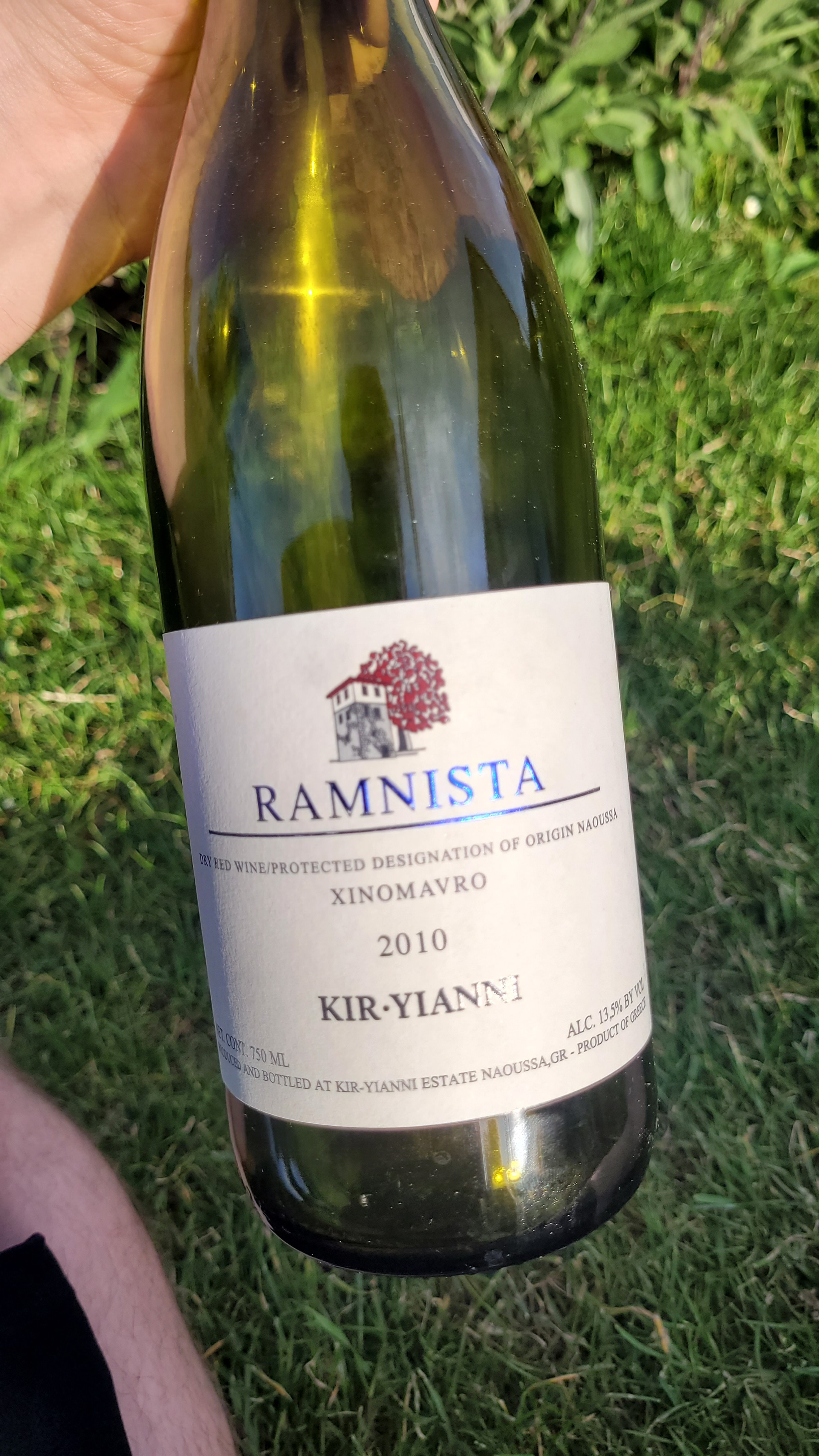
Ramnista 2010 by Kir-Yianni, still intact at sixteen years of age. Our own photo
How does Xinomavro age?
This is the question the variety is known for – and the only one you can answer solely with old bottles. We have opened a few.
The proof came with the Reserve Naoussa 1992 by Tsantali: with more than three decades behind it, a malty nose, and behind that a surprisingly fresh palate and perfectly preserved tannins. 92 points – a remarkable result for a wine of that age from a period when nobody in Naoussa was thinking about world markets. The 1988 from the Naoussa growers' cooperative (85) still held up well with lively acidity and raspberry notes, but was clearly past its peak, and the Grand Reserve 1987 by Boutari (84) suffered from its cork before it could show what it had.
Between those extremes lies what is actually useful. The Ramnista 2010 (88) was intact at sixteen years, whereas the 2006 (86) had already lost too much fruit for all the finesse of its tannins. The Deka X 2010 by Oenogenesis (93), half Xinomavro and half Merlot, held up considerably better with a clearly oxidative but very refined profile.
The practical lesson from these bottles: Xinomavro can grow very old, but it does not do so reliably, and it does not do so in a straight line. Between the fifth and the tenth year many wines lose their primary fruit before the tertiary aromas have arrived. If you have a bottle lying down and you are impatient, you are better off opening it young – or genuinely waiting two decades.
Not only red: rosé, sparkling wine, blanc de noir
The most surprising figure from our tastings: a good one in four of our 57 Xinomavro tastings was not a red wine. For a variety with a reputation for weight and tannin that is a small sensation – and a direct result of the Amyndeo rules.
One of the best rosés of our series comes from Kir-Yianni: the L'Esprit du Lac 2021 (93) from old vines combines crystalline acidity with chalky tannins and exactly the right sweetness; the 2023 (91+) is the younger, somewhat more boisterous brother. That the older bottle was the better one confirms our favourite mantra: Greek rosés and whites are opened far too young.
The Hedgehog Rosé from Alpha Estate is the one rosé of which we know four vintages side by side – 2019 (94), 2020 (90), 2021 (88) and 2022 (91). Those are four different wines, not a decline curve.
Then there is the unfussy, straightforwardly good Xinomavro Rosé 2020 by Gerovassiliou (91) with its razor-sharp acidity, the Gris de Noir 2018 by Aidarini (90) with its dried tomatoes, and in sparkling wine the Akakies Sparkling 2023 (88), which offers extraordinary value for under 15 euros.
The curiosity to finish with sits in PGI Magnesia: the Blanc de Noir by Patistis (93), pressed white from 96 per cent Xinomavro, with notes of lees and green apple, fine tannins and a light sparkle nobody ordered and that fits perfectly all the same.
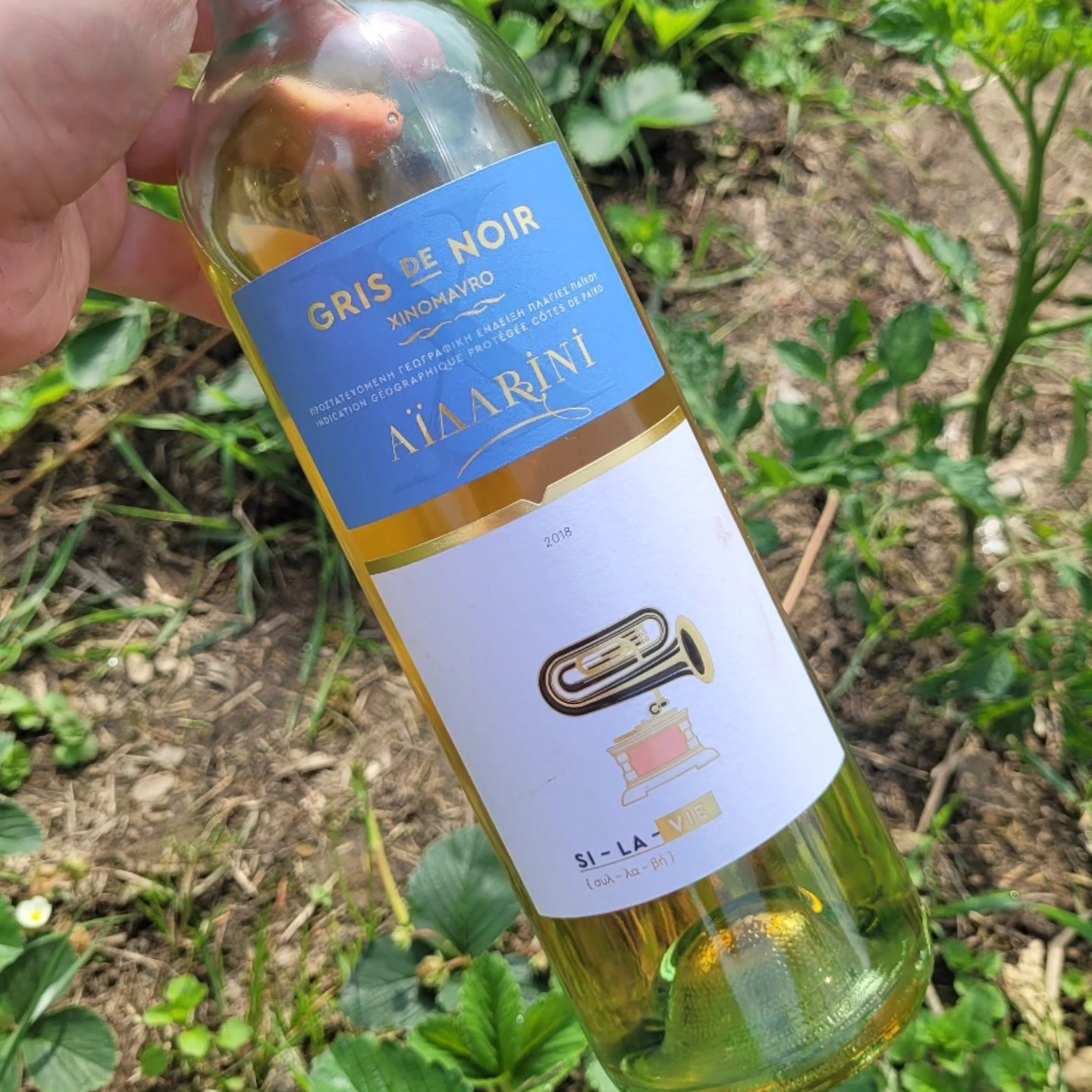
Xinomavro pressed white: the Gris de Noir by Aidarini. Our own photo
Xinomavro beyond the appellations
Outside the PDO rules things get experimental, and often they get good. The XinomavRaw 2021 by Oenops (93) is spontaneously fermented, raised in egg-shaped amphorae without sulphur and unfiltered – pale, full of energy, with green apple and strawberry. The Kamara Hill 2019 by Patistis (93) combines old vines, spontaneous fermentation and élevage in oak and amphora into a rare mixture of grain and elegance. From PGI Siatista comes the Parcel Selection 2017 by Magoutes (93).
Not everything succeeds. The Valos 2018 by Domaine Katsaros (84) shows that even an estate with excellent Bordeaux blends and Chardonnays can fail with this grape, and the Xinomavro 2017 by Diofili (87) stayed thin on the palate despite seventy-year-old vines.
The furthest excursion crosses the border: the Xinomavro 2021 by Chamlija (91) grows in the Strandja mountains of Turkey. At eleven per cent alcohol and with lively redcurrant, it is lighter and fresher than you would expect – and closer to the Greek natural-wine approach than to the cool reds of Amyndeo.
Xinomavro in blends
Where Xinomavro is only one partner among several, its character shifts considerably. The Diaporos 2018 by Kir-Yianni (94) is one of the most impressive cases: the vineyard lies in Naoussa, but eight per cent Syrah rules out PDO status – and what a good decision that was. A wine full of tomato aromas, with an inviting texture and perfectly integrated fifteen per cent alcohol, leaving many famous PDO wines from the same area behind it. The vintage is worth noting too: 2018 was a weak year in Naoussa.
At Alpha Estate, Xinomavro meets Syrah, half and half, in the Axia – a fruit-driven, immediately approachable wine that we have placed between 89 and 92 points across several years and vintages, among them the 2022 (90). The Red Rhapsody 2019 by Kotoulas (88+) heads the same way with 35 per cent Syrah but still feels rigid. The Arothimies 2017 by Ktima Kelesidis (88) is the odd one out: made off-dry, with prominent violet notes, not to everyone's taste, but cleanly made.
And then there is the Apla red 2020 by Oenops (91), in which Xinomavro meets Limniona and Mavroudi: the name means "simple", the wine is not.
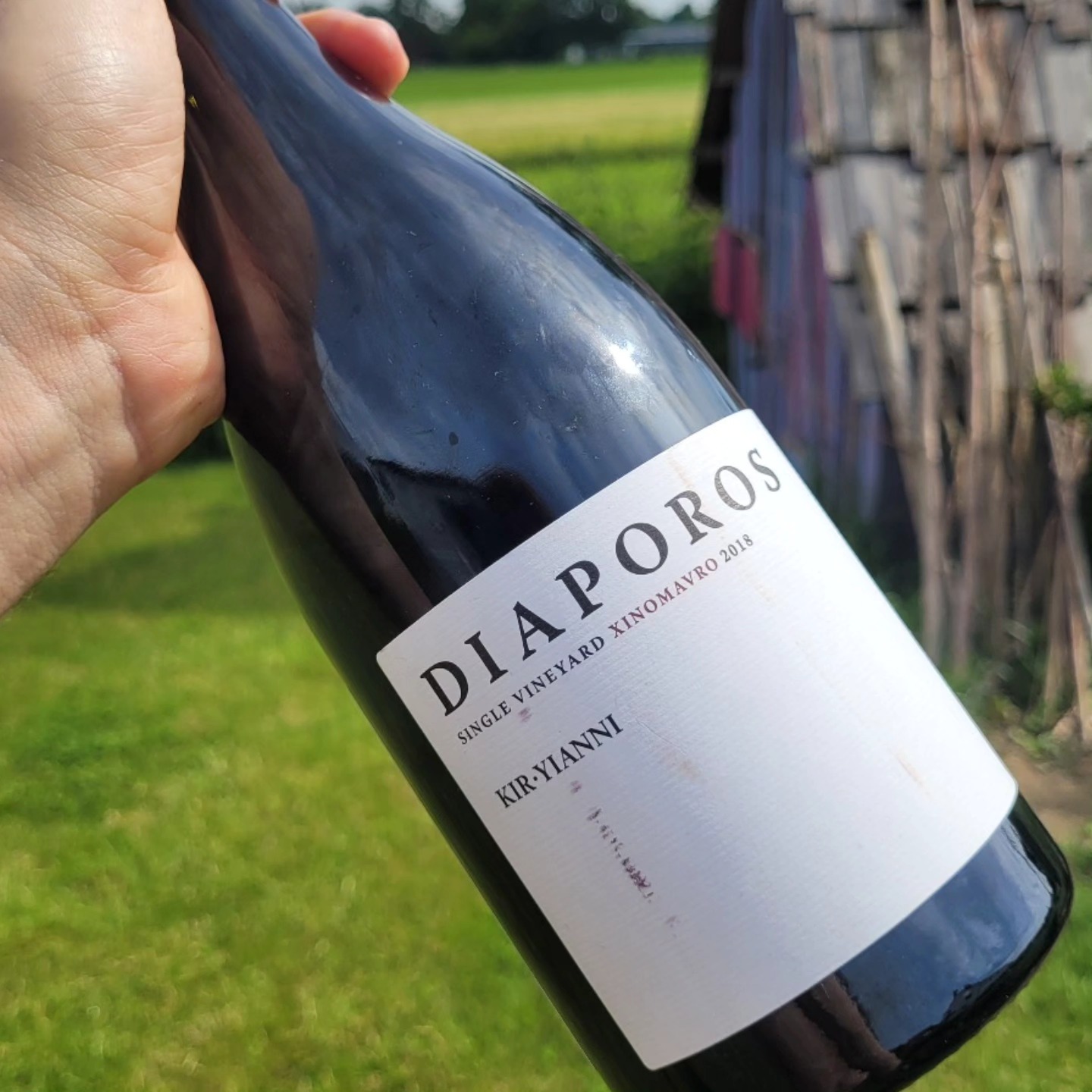
Diaporos 2018 – a vineyard in Naoussa, kept out of the PDO by eight per cent Syrah. Our own photo
Which vintages?
Naoussa and Amyndeo lie far to the north and are continental – vintage differences are greater here than almost anywhere else in Greece, and they do not follow the national picture. They do not even follow each other.
No year shows that as clearly as 2018. In Naoussa, downy mildew ruined the vintage; it stands at 5.0 out of 10 in our vintage database. In higher Amyndeo the fungus stayed away, a damp early summer was followed by an almost rainless high summer, and the harvest turned out excellent: 8.5. The same grape variety, two appellations in the same part of the country, two opposite years. Anyone buying Xinomavro by vintage therefore has to know which of the two origins is in the glass.
Naoussa. 2019 was one of the strongest vintages of the century (9.0) and considerably better than the year turned out nationally. 2018 (5.0) was weak, 2012 (4.0) weaker still. 2017, 2016 and 2010 all sat at 7.0 in solid mid-field, all three slightly above the national average.
Amyndeo has a scale of its own. 2017 counts as the best vintage of its decade there (9.0), 2018 and 2019 follow closely at 8.5. 2021 drops away at 6.5 – a wet year with hail in June, and hail and rot hit late-ripening Xinomavro harder than other varieties. The difficult year here was 2016 (5.0). The reason for that independence is altitude: the coldest wine-growing highland in Greece often runs counter to the south in hot years.
In practice that still means less than you might think. The best wine on this page, the Vrana Petra 2017, comes from a middling Naoussa year, and the Diaporos 2018 with its 94 points from the weakest year we have had in the glass. The other way round, our Amyndeo wines support the numbers: Hedgehog and Barba Yannis Reserve both come from the 2017 vintage the region rates as its best.
The best Xinomavro wines of our tastings
99+ – Thymiopoulos Vrana Petra 2017 · PDO Naoussa
96 – Alpha Estate Alpha One 2019 · PGI Florina
94 – Ktima Kir-Yianni Diaporos 2018 · PGI Imathia
94 – Alpha Estate Hedgehog Rosé 2019 · PDO Amyndeo
93+ – Alpha Estate Hedgehog 2017 · PDO Amyndeo
93 – Ktima Kir-Yianni L'Esprit du Lac 2021 · PDO Amyndeo
93 – Ktima Kir-Yianni Bidabla 2019 · PDO Goumenissa
93 – Oenogenesis Deka X 2010 · PGI Macedonia
93 – Oenops XinomavRaw 2021 · Macedonia
93 – Patistis Blanc de Noir NV · PGI Magnesia
93 – Patistis Kamara Hill 2019 · PGI Magnesia
93 – Magoutes Parcel Selection 2017 · PGI Siatista
92+ – Terra Olympus Terra Petra 2018 · PDO Rapsani
92+ – Mikro Ktima (Titos) Goumenissa 2019 · PDO Goumenissa
92 – Tsantali Reserve Naoussa 1992 · PDO Naoussa
91+ – Ktima Kir-Yianni L'Esprit du Lac 2023 · PDO Amyndeo
91 – Alpha Estate Hedgehog Rosé 2022 · PDO Amyndeo
91 – Chamlija Xinomavro 2021 · Strandja mountains, Turkey
91 – Karadimos Xinomavro 2015 · PGI Opountias Lokridas
91 – Ktima Gerovassiliou Xinomavro Rosé 2020 · PGI Thessaloniki
91 – Oenops Apla red 2020 · PGI Drama
91 – Thymiopoulos Earth and Sky 2021 · PDO Naoussa
91 – Tsantali Rapsani Grand Reserve 2012 · PDO Rapsani
Every other Xinomavro we have tasted
Aidarini Goumenissa 2018 (90) · Aidarini SI-LA-VIE Gris de Noir 2018 (90) · Alpha Estate Barba Yannis Reserve 2017 (90+) · Alpha Estate Hedgehog Rosé 2020 (90) · Alpha Estate Axia 2022 (90) · Ktima Kir-Yianni Cuvée Villages 2019 (90) · Ktima Kir-Yianni Ramnista 2017 (90) · Ktima Kir-Yianni Ramnista 2018 (90) · Tsantali Rapsani Reserve 2000 (90) · Ktima Kir-Yianni Kali Riza 2019 (89) · Oenops Apla rosé 2021 (89) · Alpha Estate Axia 2017 (89) · Aidarini Rosé 2021 (88) · Aidarini SI-LA-VIE 2016 (88) · Alpha Estate Hedgehog Rosé 2021 (88) · Karadimos Heilia Stafylia Rosé 2021 (88) · Kotoulas Red Rhapsody 2019 (88+) · Ktima Kelesidis Arothimies 2017 (88) · Ktima Kir-Yianni Akakies Sparkling 2023 (88) · Ktima Kir-Yianni Ramnista 2010 (88) · Ktima Kir-Yianni Ramnista 2019 (88) · TsillisTerres IÓ Rosé 2021 (88) · Aidarini Single Vineyard Goumenissa 2012 (87) · Diofili Xinomavro 2017 (87) · Ktima Kir-Yianni Akakies Rosé 2021 (87) · Patistis Rosé 2021 (87) · Diofili Rosé 2021 (86) · Kelesidi Merhali 2016 (86) · Ktima Kir-Yianni Ramnista 2006 (86) · Naoussa growers' cooperative 1988 (85) · Tsantali Reserve Naoussa 2015 (85) · Boutari Grand Reserve Naoussa 1987 (84) · Cavino Naoussa Xinomavro 2019 (84) · Domaine Katsaros Valos 2018 (84) · Amyndaion Winery Reserve 2019 (81) · Tsantali Rapsani 2013 (75)
More on the subject
· Xinomavro Masterclass – the
systematic exploration a large part of these tastings comes from: Naoussa, Amyndeo, Goumenissa, Rapsani and the outliers, wine by wine.
· All tasting notes in our database
Newsletter: If you would like finds like these delivered to your inbox: sign up for our newsletter.
In summary
Xinomavro is the most demanding grape variety in Greece – demanding for the grower, and at first for the drinker too. Anyone willing to go along with the tomato note and to serve the wine cool enough will find behind it wines with a structure and a lifespan that hardly any other Mediterranean red achieves. The easiest way in is a rosé from Amyndeo or a Goumenissa blend; if you mean business, take a Naoussa and give it time.
Picture credits
Aerial photograph of the winery: Photo: Alpha Estate. Landscape photograph via Wikimedia Commons: Petar Milošević – Lake Vegoritida (CC BY-SA 4.0). The three bottle photographs are from our own tastings. Vineyard photographs: Barba Yannis bush vines – Photo: Alpha Estate; harvest in Naoussa – Photo: Kir-Yianni. Both estates provided these images for this page.