
Moschofilero: Greece's Most Fragrant White Grape
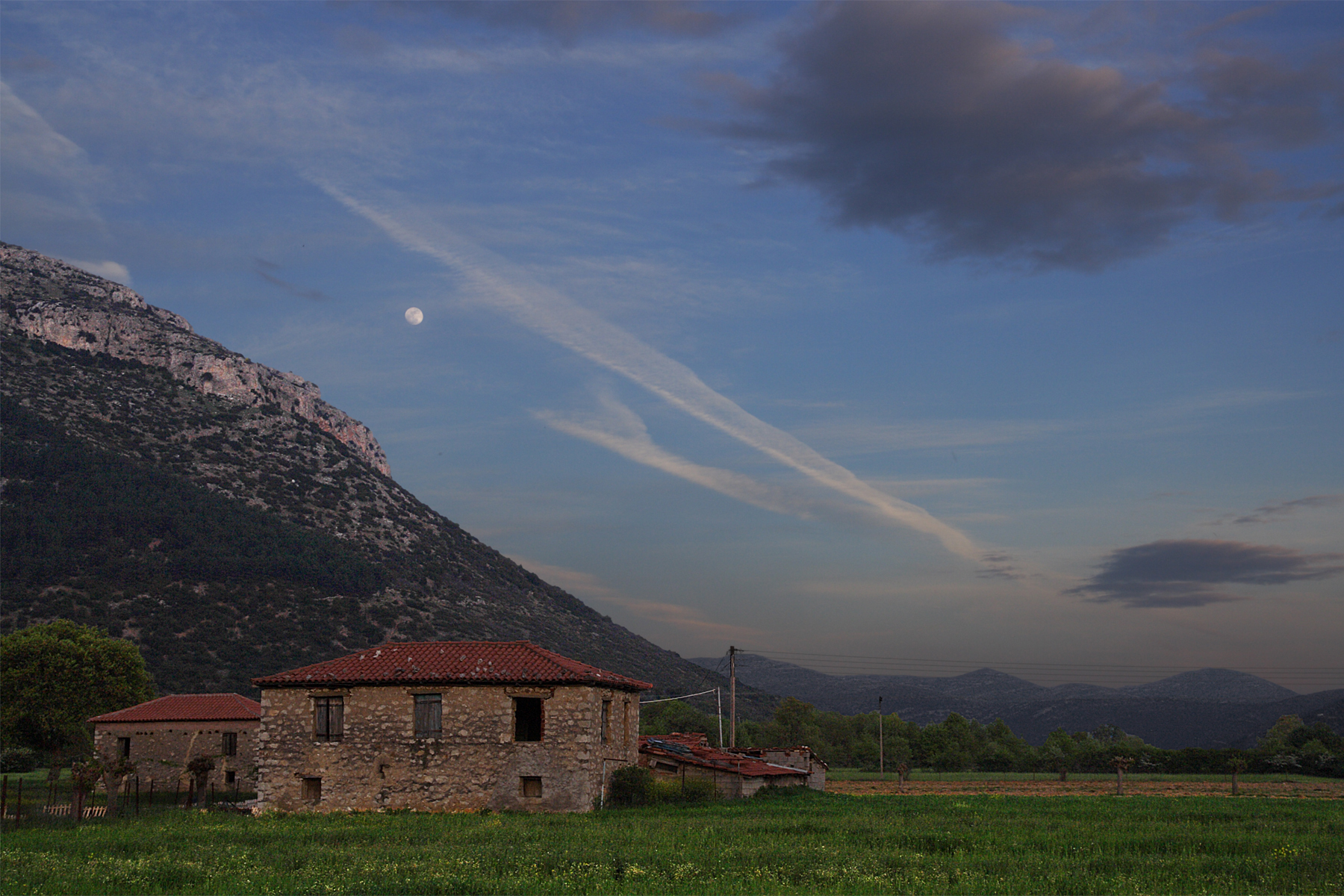
The Mantinia plain at dusk. Photo: ulrichstill / Wikimedia Commons, CC BY-SA 3.0 DE
In a nutshell
· Colour: White – dry, plus rosé and sparkling
· Name: Greek Μοσχοφίλερο – "Moscho" (fragrant, musk-like) plus "Filero", the name of the whole grape family it belongs to
· Origin: the Arcadian plateau on the Peloponnese, first documented in 1601 – one of the oldest documented grape varieties in Greece
· Appellation: PDO Mantinia, minimum 85% Moschofilero (Asproudes permitted alongside), elevation 600–800 m
· Berry: pink to greyish skin – yet almost exclusively vinified as white wine, comparable to Pinot Gris
· Typical: citrus, green fruit, rose petals – light body, lively acidity
· Comparison: Greece's answer to Gewürztraminer or Muscat: aromatic, but finished dry
All scores on this page come from our own tastings; we do not sell wine. Where we quote a figure like "from 26 of our own tastings", we count wines that are varietally pure or at least half Moschofilero.
What is Moschofilero?
Moschofilero belongs to the Fileri family – a small group of closely related, pink-skinned Greek grape varieties whose exact ancestry remains scientifically unresolved (more on the close relative Fileri further below). The name gives away the key trait: "Moscho" stands for the intense, musk-like fragrance that makes Moschofilero the most aromatic member of the whole family.
The variety's home is the Arcadian plateau in the mountainous centre of the Peloponnese, around the ancient site of Mantineia. First documented in 1601, Moschofilero ranks among the oldest named grape varieties in Greece – and is at the same time one of its most successful domestic export stories: the variety covers roughly 1,000 hectares nationwide, with clear concentrations in Tegea, Mantinia and Levidi.
What does Moschofilero taste like?
The leitmotif is fragrance: citrus, green fruit, and above all rose petals – an aroma that places Moschofilero in the same stylistic corner as Gewürztraminer or Muscat, without adopting their residual sweetness. Almost all our tastings are finished dry.
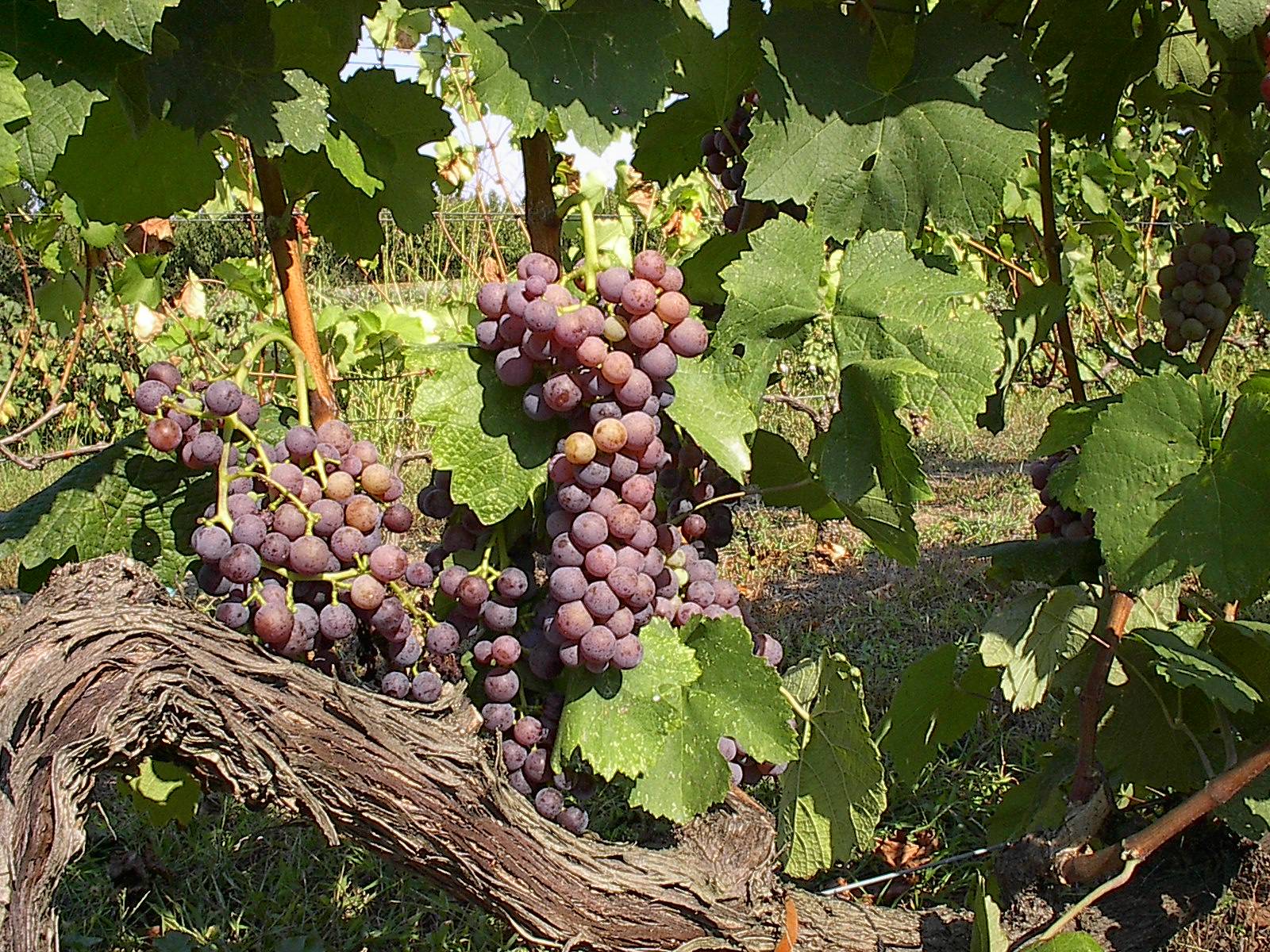
Moschofilero grapes shortly before harvest. Photo: Elisavetch / Wikimedia Commons, public domain
What defines the variety is the contrast between an intense nose and a light, often almost mineral body: the grapes are harvested late and ripen slowly in the cool elevation of the Arcadian plateau, producing wines with lively acidity that balances the perfumed bouquet. A well-made Moschofilero is never heavy – "flower meadow on the nose, backbone on the palate" describes the variety better than any fruit metaphor.
One peculiarity: despite its pink-grey berry skin (comparable to Pinot Gris), Moschofilero is overwhelmingly vinified as white wine – only a growing minority of producers leave the must briefly on the skins to make a rosé, which in Greece is occasionally even sold as "κόκκινο κρασί" (red wine), even though under German wine law it would count as rosé or even white.
PDO Mantinia – the homeland
The PDO Mantinia requires a minimum of 85 percent Moschofilero (the remaining 15 percent may be filled with Asproudes, though in practice most wines are varietally pure). The zone sits on the Arcadian plateau, a highland at 600 to 800 metres – one of the cooler wine-growing elevations in Greece, which directly benefits the variety's aromatic, acid-driven style.
In our own best-of list, the PDO shows a narrow but steep spread: from 94 points (Ktima Tselepou's sparkling Amalia, more on that below) down to 76 points for a bottle almost 30 years old – the range of an appellation that shows both the variety's showpiece and its ageing limit.
Around the PDO lies a considerably larger growing area: PGI Arkadia directly adjoining (our second-strongest group by note count), PGI Peloponnese as a broader origin designation, plus scattered outliers such as PGI Evia in central Greece – a sign that Moschofilero has long since grown beyond its Arcadian homeland.
Which vintages matter?
For PDO Mantinia, an unbroken white-wine vintage series from 2000 to 2025 exists – according to our vintage-data team the most complete single source assembled for this project so far. Confidence varies between years; 2007, 2016 through 2021, 2023 and 2024 are documented with particular reliability.
2012 marks the peak of the series: a primary source describes it as the best harvest in 30 years – a dry, warm summer without disease pressure produced small, healthy berries and exceptional aromatic development. Also strong: 2017 (an outstanding year with the earliest harvest the source records), 2019 and 2020 – the latter benefited from timely rain despite storm Ianos, helping both quantity and quality – plus 2022 and 2025.
The hardest years were 2002 and 2007 (the lowest scores in the series) and 2016, when frost, hail and downy mildew still allowed excellent quality in the plots that escaped damage. 2024 brought the earliest harvest in at least 25 years, after the warmest and driest winter in the series.
One gap remains deliberate: no calibrated values exist before 2000 – our oldest bottle, the Cavino Atelier 1994 (see "How does Moschofilero age?"), stays without a vintage rating.
The styles
White – the standard case
The vast majority of our notes are dry white wine, usually vinified in stainless steel to preserve the floral aromatics as unfiltered as possible. The Mantinia 2021 from Nemea Winery (88 points) is a good entry point: uncomplicated, varietally true, without embellishment. Anyone wanting to get to know the PDO in its most typical form will find it in the Mantineia 2021 from Vervenioti Winery (90 points), with the floral notes so characteristic of Mantinia, or in the Mantineia 2021 from Ktima Tselepou (89 points), which marks the floral end of the spectrum even more clearly – at the cost of a little minerality.
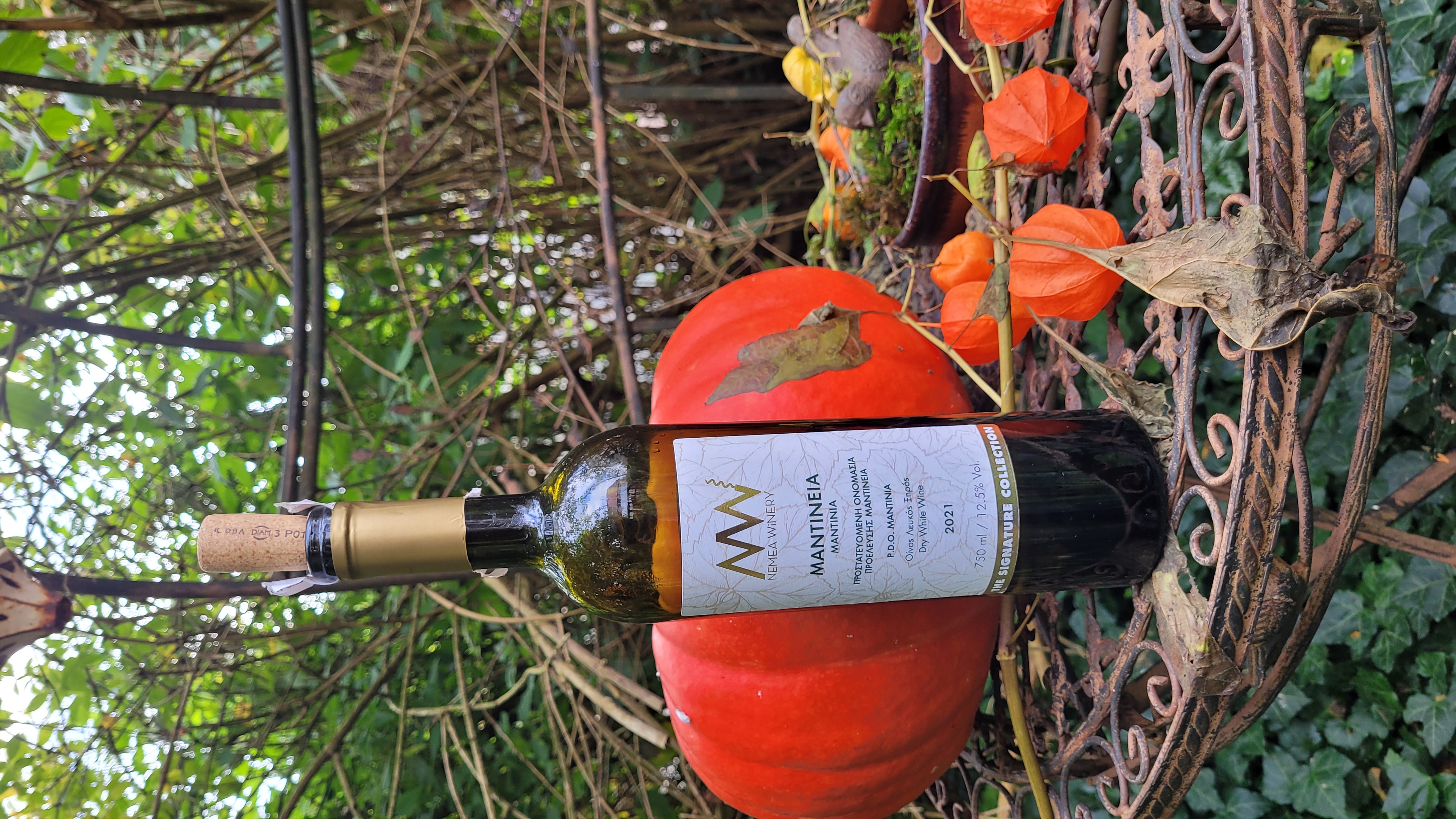
Nemea Winery Mantinia 2021, an uncomplicated entry point. Our own photo
Outside the PDO, the variety shows more range: the Mister Helios from Ktima Kalogri marks a hinge function between traditional PDO Mantinia style and the more experimental PGI Arkadia wines – two independent tastings of the same 2020 vintage scored 92 and 93 points, a rare demonstration of consistency over time. The Kalderimi 2020 from Panagiotopoulos Wines (91 points) comes from a small, locally rooted site in Trifilia that you would normally only encounter travelling through the region.

Ktima Kalogri Mister Helios 2020, a hinge between PDO and PGI. Our own photo
Rosé – the growing side style
Roughly a quarter of our dominant notes are rosé, and the share is growing: the pink-grey berry skin benefits the variety here too, with wines ranging from delicate salmon pink to a deeper, almost reddish tone. The Juliet & Romeo 2020 (93 points) and the Dialogues 2019 from Ktima Kalogri (93 points) mark the top of this style. For anyone wanting to go deeper into this facet of the variety: our own deep dive **Moschofilero in Pink(ish) Red** was originally the very first tasting report on the variety – written before this overview even existed.
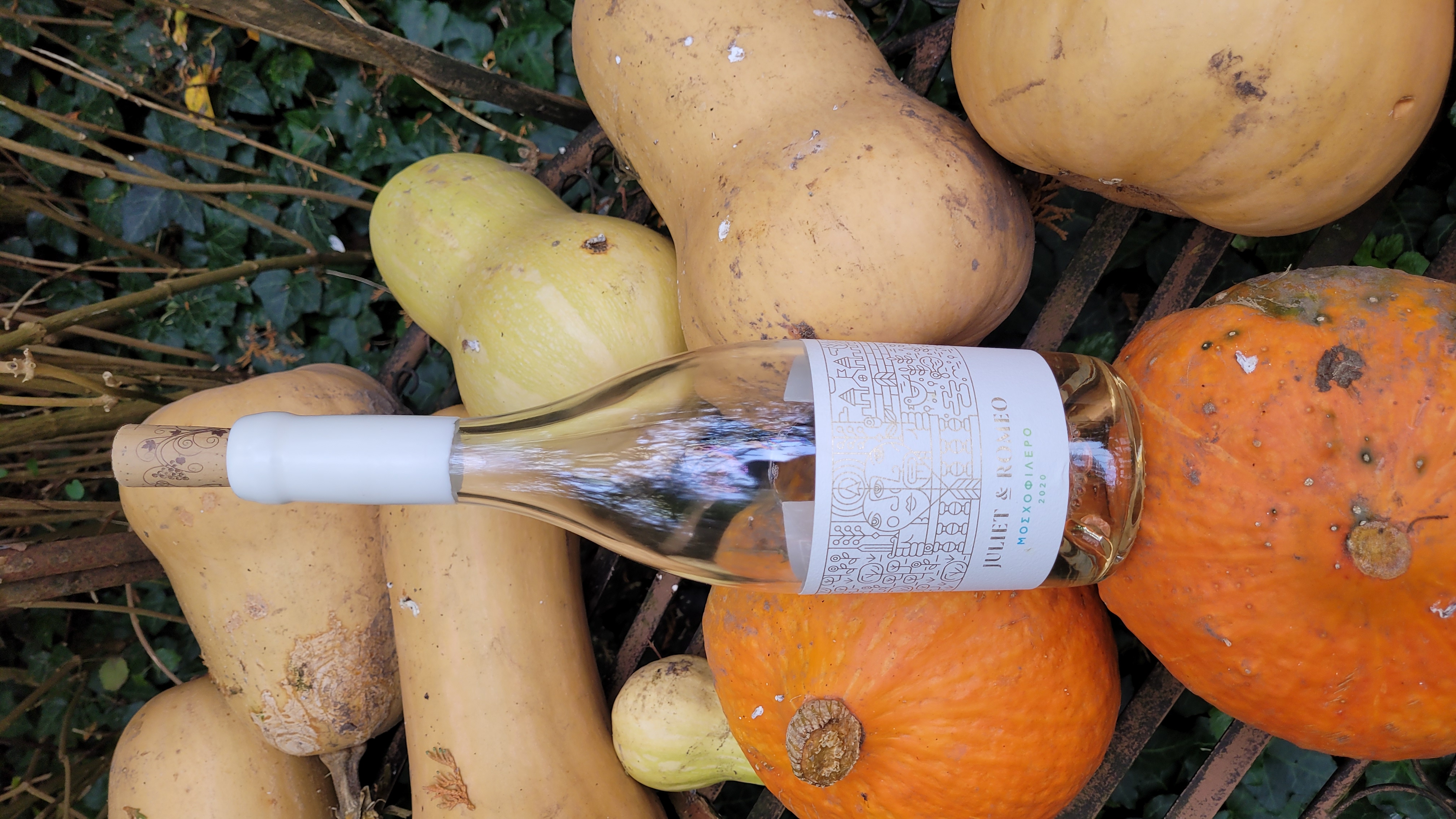
Juliet & Romeo 2020, one of the top rosé wines. Our own photo
Sparkling – the exception with altitude
The cool elevation of the Arcadian plateau also suits the Méthode Traditionnelle: the Amalia 2018 from Ktima Tselepou is, at 94 points, the highest-scoring Moschofilero in our entire database – brioche and citrus notes, with the variety's typical red-fruit undertone in the background. A second sparkling wine, the Prelude 2019 from Milia Riza (90 points), confirms that the variety is more than a footnote in this style.
How does Moschofilero age?
An honest answer: not particularly well. Our oldest bottle, the Atelier 1994 from Cavino – won at an online auction – came in at 76 points: the cork still held, the colour had turned deep yellow, but none of the original floral freshness remained after almost 30 years. Moschofilero lives on its fragrance, and that fragrance fades – anyone wanting to get to know the variety should drink it young.
Moschofilero and its close relative Fileri
One caveat belongs to the honesty of this page: whether Fileri is the ancestor, the descendant, or merely a differently coloured terroir variant of Moschofilero has never been scientifically resolved. In practice, the two names often appear side by side on the same labels, sometimes even for the same wine across different vintages. The Fileri white from Nestor Winery (PGI Trifilia) shows how close the two sit together: reserved on the nose, gaining mineral depth on the palate – stylistically almost indistinguishable from a classic Moschofilero.
What does Moschofilero go with?
Moschofilero brings what suits light, aromatic cooking: floral freshness, lively acidity and moderate alcohol. The rose-petal aromatics pair beautifully with Asian cuisine – especially with a touch of chilli or ginger, which the acidity handles confidently. With seafood and light fish, Moschofilero is a reliable choice, as it is with light goat's-cheese starters. The sparkling style works as an aperitif, the rosé with grilled vegetables and light meat.
Rule of thumb: the younger the wine, the better – Moschofilero is a variety for the moment, not for the cellar.
The best Moschofilero wines of our tastings
All wines on this list are at least half Moschofilero – from 26 of our own tastings.
· 94 – Ktima Tselepou Amalia 2018 (sparkling, PDO Mantinia)
· 93 – Juliet & Romeo Wines Juliet & Romeo 2020 (rosé, PGI Arkadia)
· 93 – Ktima Kalogri Dialogues 2019 (rosé, PGI Arkadia)
· 93 – Ktima Kalogri Mister Helios 2020 (PGI Arkadia)
· 92 – Ktima Kalogri Mister Helios 2020 (PGI Arkadia, second tasting)
· 91 – Ktima Kalogri Mrs. Poulia 2021 (rosé, macerated, PGI Arkadia)
· 91 – Panagiotopoulos Wines Kalderimi 2020 (PGI Peloponnese)
· 90 – Astir X Winery Fare Rebels White 2021 (PGI Peloponnese)
· 90 – Domaine Paliomylos Themonies 2019 (Peloponnese/Aegean Islands)
· 90 – Ktima Kissa Mikros Dromos 2020 (rosé, PGI Peloponnese)
· 90 – Milia Riza Prelude 2019 (sparkling)
· 90 – Nikolaou Estate Moschofilero 2021 (PGI Peloponnese)
· 90 – Skoumpris Winery Flevaris 2021 (PGI Evia)
· 90 – Vervenioti Winery Mantineia 2021 (PDO Mantinia)
· 89 – Dionysos Winery Orama White 2021 (PGI Peloponnese)
· 89 – Ktima Tselepou Mantineia 2021 (PDO Mantinia)
· 88 – Domaine Paliomylos Skales Varsamou 2019 (PGI Ilia)
· 88 – Nemea Winery Mantinia 2021 (PDO Mantinia)
· 86 – Fteri Vinum Winery La Nonna 2020 (rosé, PGI Arkadia)
· 85 – Astir X Winery Mati Fortuna White 2021 (PGI Peloponnese)
· 84 – Domaine Paliomylos Paliomylos Rosé 2021 (rosé, Peloponnese/Aegean Islands)
· 84 – Fteri Vinum Winery Aithonas 2020 (PGI Arkadia)
· 84 – Pentheas Moschofilero 2021 (Attica)
· 81 – Dionysos Winery Moschofilero 2021 (PGI Peloponnese)
· 79 – Dionysos Winery Agiorgitiko Moschofilero 2021 (rosé, PGI Peloponnese)
· 76 – Cavino Atelier 1994 (PDO Mantinia)
A note on the scale: our older articles still use the 20-point scale; all scores on this page have been converted to our 100-point scale.
What to pour tonight
In one sentence: Moschofilero is Greece's most fragrant grape variety – aromatic like a Gewürztraminer, but lean and finished dry.
If you haven't tried the variety yet, start with a classic PDO Mantinia wine like the Vervenioti Mantineia. For a deeper dive, try the sparkling Amalia or one of the rosé wines from our **deep dive on Moschofilero in Pink(ish) Red**.
Read on: our Moschofilero deep dive
This page gives the overview – we cover the rosé facet of the variety in depth in our own article:
· Moschofilero in Pink(ish) Red – four wines between delicate rosé and a robust "κόκκινο κρασί"
Never miss a new tasting
We are constantly tasting new Greek wines – from the affordable everyday bottle to the icon wine – and we write every note ourselves. If you do not want to miss any: **sign up for the newsletter here**. Free of charge, cancel at any time.
Image credits
Landscape photo via Wikimedia Commons: ulrichstill – Mantinea, Arcadia, Peloponnese, Greece (CC BY-SA 3.0 DE). Grape photo: Elisavetch – Moschofilero (public domain). The three bottle photos are from our own tastings.