
Ktima Erithrou Rodou – Assyrtiko 2024
French Oak
PGI Drama
100% Assyrtiko
Macedonia, Greece
White | dry
13%
Ktima Erithrou Rodou is a young boutique family winery in Drama, founded around 2019, though the vineyard was planted back in 2009. The name translates as "Winery of the Red Rose" and plays on three references at once: the red earth of Kokkinogeia, the family name Triantafyllidis (Greek for "rose"), and the wild roses growing among the vines. Those in charge are Giannis Triantafyllidis, who oversees vineyard, cellar and bottling all in one, and Dr. Katerina Karampatea, a chemist and doctorate-holding oenologist shaped by Burgundy – and it is precisely this Burgundian training that explains the serious barrel and fine-lees aesthetic of this wine.
The winemaking is accordingly elaborate: 100% Assyrtiko from the Ammoudies site near Kokkinogeia in the Aggitis Valley, at 200 metres, in a very cool microclimate that runs two to five degrees below the rest of the PGI Drama zone. The vines are 15 years old. Only the free-run must is used, without pressing, following a pre-fermentative cold maceration of twelve hours at eight degrees. Alcoholic fermentation takes place entirely in French barriques, followed by eight months on the fine lees with bâtonnage. Only 2,500 bottles of the 2024 were made. In Germany it costs around 28.90 to 29.50 euros – a premium price for an Assyrtiko outside Santorini, but one justified by the tiny quantity and the barrel ageing.
As a vintage, 2024 was a real test of endurance in Macedonia: Greece's hottest and driest year on record, massive drought stress, the earliest harvest ever. In the split between colours, the whites were the losers – extreme heat burns off the aromatics, the acidity collapses, and the Macedonian whites were therefore the toughest exercise of the year when it comes to freshness and tautness. What one would expect, then, is a ripe, powerful, body-driven wine with a risk of over-ripeness.
All the more remarkable, then, that grip and elegance come together here. On the nose the Assyrtiko is recognisable, the minerality makes itself felt, along with a touch of apricot. On the palate there is good grip and at the same time elegance, unfolding steadily. The finish is fruity and exotic, with papaya – the sort of thing you rarely get with the very serious Santorini Assyrtikos. I prefer this style to sheer austerity. One note: don't serve it too cold, otherwise the oak with its vanilla notes comes through too strongly.
I tasted the wine in June 2026 alongside the same estate's Malagouzia 2024, and the direct comparison was revealing. The Assyrtiko was harvested earlier and came through the heat year noticeably better than the later-picked, unoaked Malagouzia. This tallies with the competition gap – the Assyrtiko took Gold with 92 points at the Thessaloniki Wine & Spirits Trophy 2026, the Malagouzia only Bronze with 86 – and with my own scores, since I put the Assyrtiko at 93 and the Malagouzia at 92. In addition, the Assyrtiko was awarded Gold at the Mondial des Vins Blancs in Strasbourg 2026.
In the vertical, this is my second vintage of this wine. I had rated the debut vintage, the Assyrtiko French Oak 2021, at 94 points in 2022 at one year of age: surprisingly fresh and Riesling-like, with lime and green apple, a chalky, grainy palate and long-lasting acidity, behind it sweetness and spicy oak notes – the winemaker read nutmeg in them, I rather saw clove – and, despite the French oak, not heavy or creamy, at 13.5%. The 2024 sits just below at 93 points, and the difference is stylistic: it is riper and more exotic, papaya instead of the fresh, strict Riesling line – clearly driven by the heat year. But for me still, in any case, preferable to most wines of this variety from Santorini. And at that price all the more so.
93 points, without a plus.
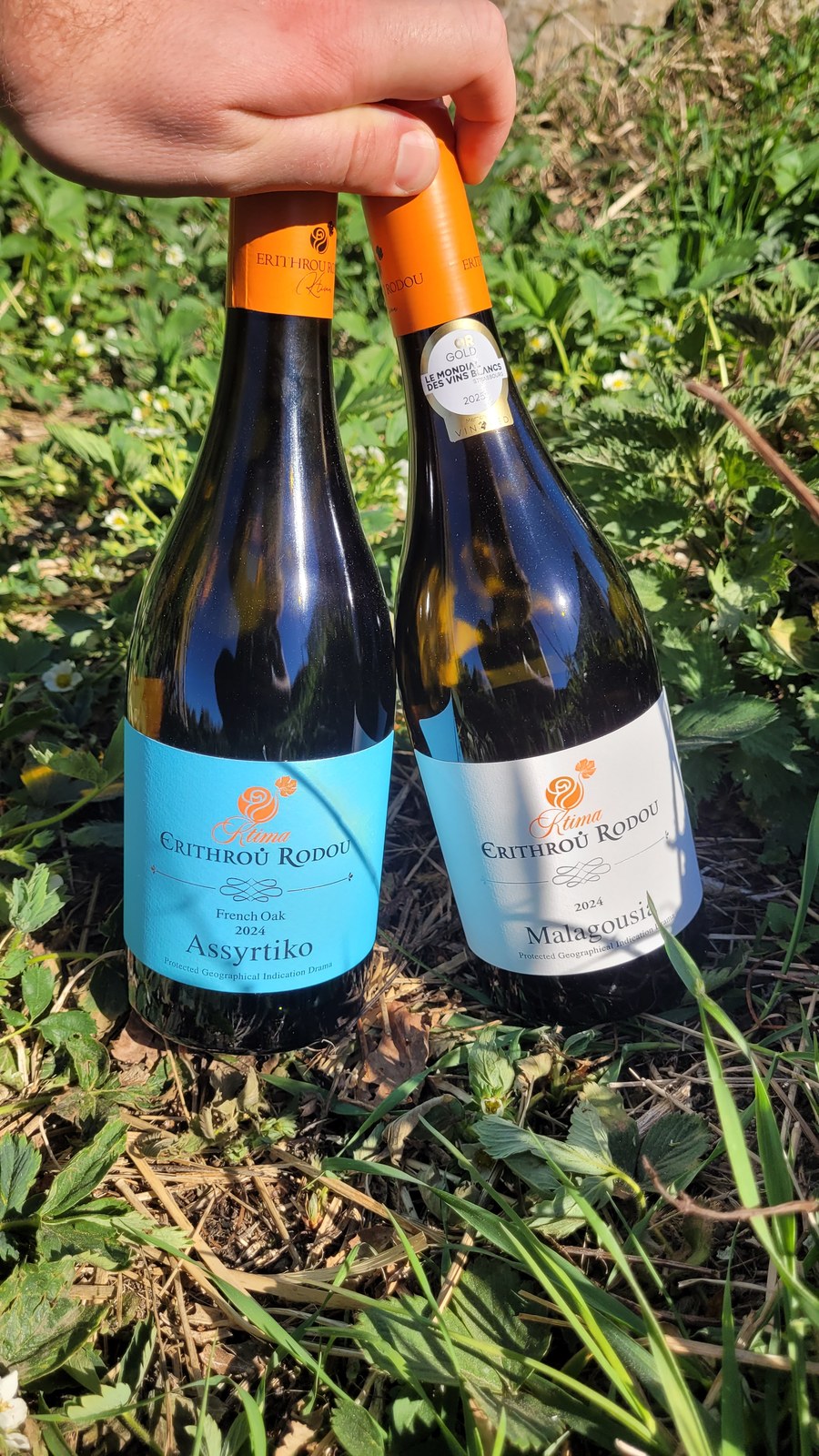
Tasted: June 2026
Other vintages:
Ktima Erithrou Rodou – Assyrtiko 2021 (94, 2022)